
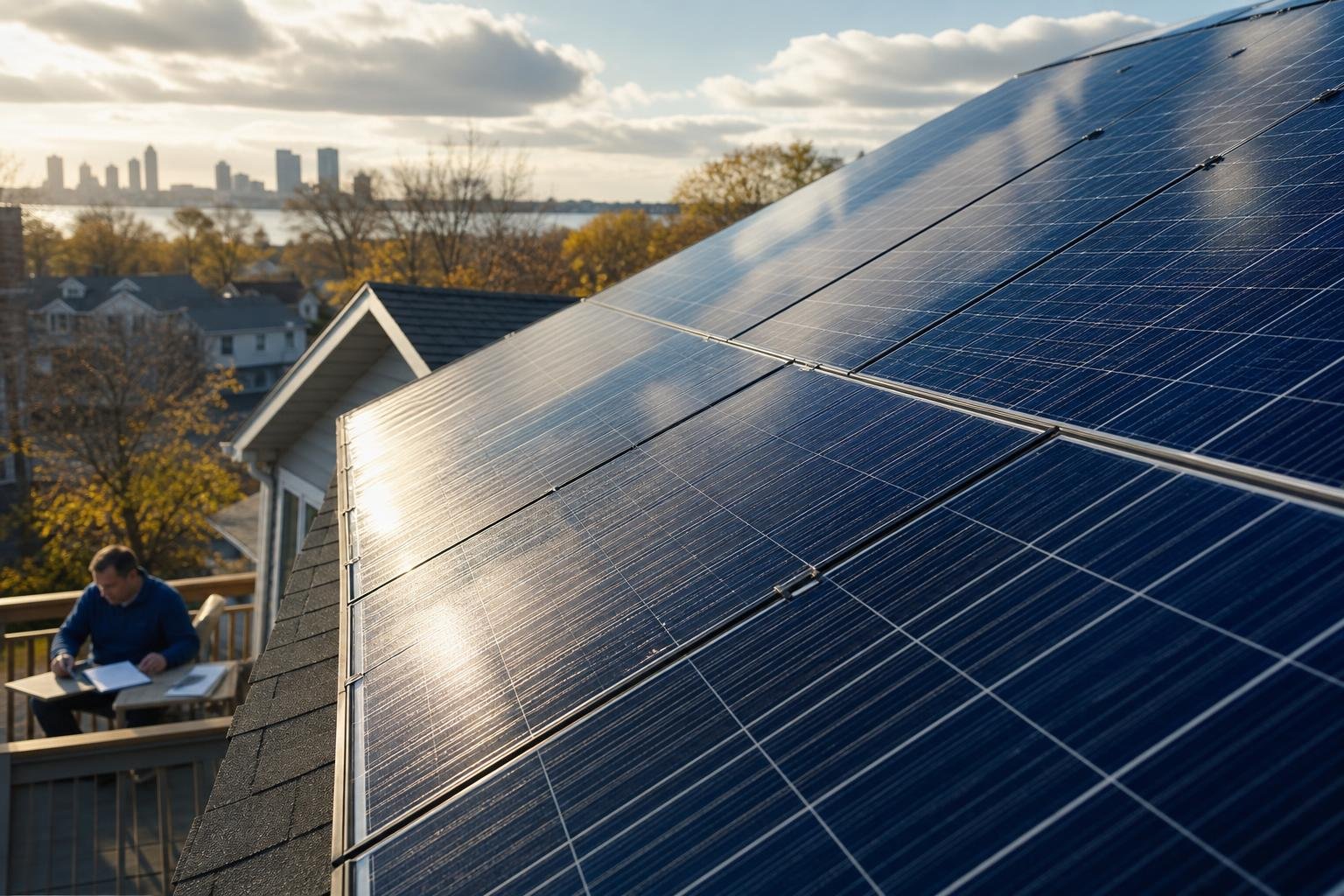
Solar Incentives in Buffalo, Explained Clearly
Buffalo homeowners often have several incentive layers to review, including federal tax treatment, New York programs, and utility bill-credit rules that can affect overall value.
Program details can change, so current eligibility should always be confirmed before you sign.
The Main Solar Incentives to Review First
For many Buffalo homeowners, the first incentives to review are the federal Residential Clean Energy Credit, New York's NY-Sun program, and the New York residential solar tax credit. NYSERDA states that NY-Sun incentives are generally provided through participating contractors and can reduce the upfront project price, while tax-credit eligibility depends on the homeowner's situation and ownership structure.
How Federal and New York Incentives Usually Fit Together
The federal Residential Clean Energy Credit is typically the first place homeowners look because it can materially affect net project cost when the system is owned by the taxpayer claiming it. That does not mean every household will benefit in the same way, so it is worth confirming tax appetite and timing with a qualified advisor.
At the state level, Buffalo homeowners often ask about the New York residential solar tax credit and how it works alongside NY-Sun. These are not simply interchangeable discounts, so quotes should explain which benefits are reflected in pricing and which may depend on your own filing and eligibility details.
Why Utility Bill Credits Still Matter
Utility bill treatment matters too. In Western New York, the value of solar is shaped not just by installation cost but by how your utility accounts for the power your system sends back to the grid and what charges still remain on the bill.
Because utility rules can vary by territory and may change over time, homeowners should ask installers to explain current bill-credit assumptions in writing rather than relying on a broad verbal estimate.
What Buffalo Homeowners Should Confirm Before Moving Forward
A careful quote should show whether incentives are reducing the upfront cost directly, expected to be claimed later by the homeowner, or built into long-term financing assumptions. That distinction matters when comparing proposals that seem similar at first glance.
It also helps to ask whether the quote assumes full tax-credit use, immediate eligibility, or a particular utility-credit structure. Those details can change the real economics of the project even when the system size is the same.
For Buffalo homeowners, the most useful next step is usually to review current program details with your installer and verify them against official sources before signing. That helps you compare proposals on the same assumptions instead of relying on broad savings claims.
How Incentives Interact With Financing
Cash purchase
Paying cash usually gives the simplest incentive path because the homeowner owns the system directly and can review available tax benefits more straightforwardly.
Loan ownership
Solar loans may still allow the homeowner to claim certain incentives if they own the system, but loan terms and payment assumptions should be reviewed carefully.
Low-upfront structures
Low-upfront offers can sound appealing, but homeowners should confirm who owns the system, who receives any credits, and how long-term payments compare with expected bill savings.
Storage considerations
Battery storage may qualify for separate incentive treatment in some situations, but eligibility and value depend on current rules, equipment choice, and ownership structure.
What Paperwork Should You Keep
Homeowners should keep signed contracts, invoices, proof of payment, equipment details, and any forms related to utility enrollment or incentive applications. Good recordkeeping makes it easier to support claims later.
Because tax treatment and program rules are not the same for every household, it is wise to confirm documentation needs with your installer, program administrator, and tax advisor before filing or claiming benefits.
Buffalo Solar Incentives FAQ
What solar incentives should Buffalo homeowners review first?+
Buffalo homeowners often start by reviewing the federal Residential Clean Energy Credit, the NY-Sun incentive administered through participating contractors, and New York's residential solar tax credit. Utility bill-credit rules should also be checked based on the serving utility.
Do incentives still apply if I finance the system?+
They often can, but ownership matters. Tax credits are generally tied to the system owner, so the details may differ for cash purchases, loans, leases, or other third-party ownership structures.
Will solar eliminate my electric bill?+
Not always. Bill credits can reduce a large share of usage costs, but most homeowners still have fixed utility charges or seasonal differences that affect the final bill.
Are net metering rules the same everywhere in Buffalo?+
No. Net metering or bill-credit treatment can vary by utility territory and program rules, so it should be confirmed with the installer and current utility guidance for your address.
What documents should I keep for solar incentives?+
Keep contracts, invoices, proof of payment, system specifications, and any tax or program forms connected to the project. Those records are commonly needed when claiming incentives or verifying eligibility.
Ready to See Incentives in a Real Quote?
If you want to see how incentives fit into real proposals, compare quotes from companies that can explain pricing, ownership, and expected bill impacts in plain terms.